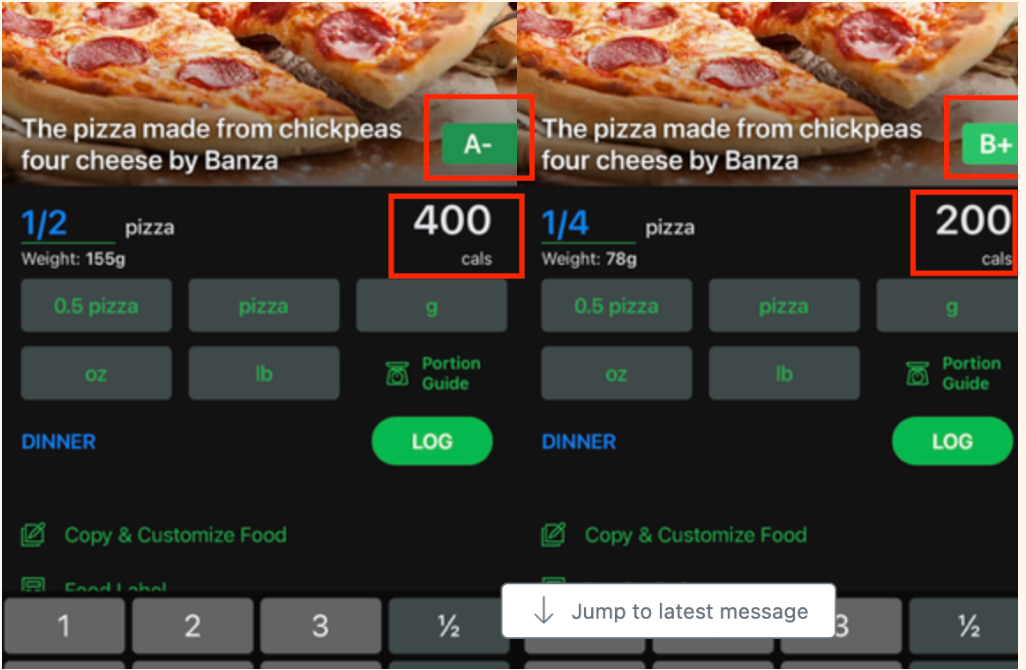
The Food Grade system assigns letter grades from A through D to help you quickly assess the nutritional value of foods. This tool is designed to simplify the process of making healthier food choices by comparing similar foods.
However, the food grade can vary with the amount of food consumed due to the way the underlying formula calculates nutritional value. This formula, which we follow based on established nutritional guidelines, adjusts the grade based on the nutritional density and other factors that are proportionate to the serving size. Essentially, it's calibrated to reflect that the healthiness of a food can change when consumed in different amounts.
For example, consuming a smaller amount of a pizza might result in a lower grade because the balance of nutrients per your dietary intake changes with the serving size. This doesn't necessarily mean one portion is unhealthy; rather, the grade reflects a relative nutritional value based on the quantity consumed.
We recommend using the Food Grade as a tool to compare similar amounts of similar foods, like comparing one slice of two different pizzas, rather than varying amounts of the same food. This approach ensures you're making a like-for-like comparison, giving you a more accurate understanding of which option might be healthier.
I hope this explanation helps clarify how the Food Grade system works. It's a nuanced tool intended to guide you toward healthier eating choices by simplifying the comparison process. If you have any more questions or need further clarification, please don't hesitate to reach out.